
Introduction
Hidden high in the Mandara Mountains of Adamawa State, Nigeria, the Sukur Cultural Landscape stands as one of Africa’s most remarkable historical and cultural treasures. Inscribed as a UNESCO World Heritage Site, Sukur is not merely an archaeological site—it is a living cultural landscape that reflects centuries of human innovation, sustainability, and social organization.
This ancient mountain settlement offers rare insight into early African civilizations, showcasing how communities thrived in harmony with nature long before modern technology.
A Living Mountain Civilization
Sukur is an ancient hilltop settlement that has been continuously inhabited for centuries. Its location atop rugged terrain was not accidental; it provided security, agricultural advantage, and a deep spiritual connection to the surrounding environment.
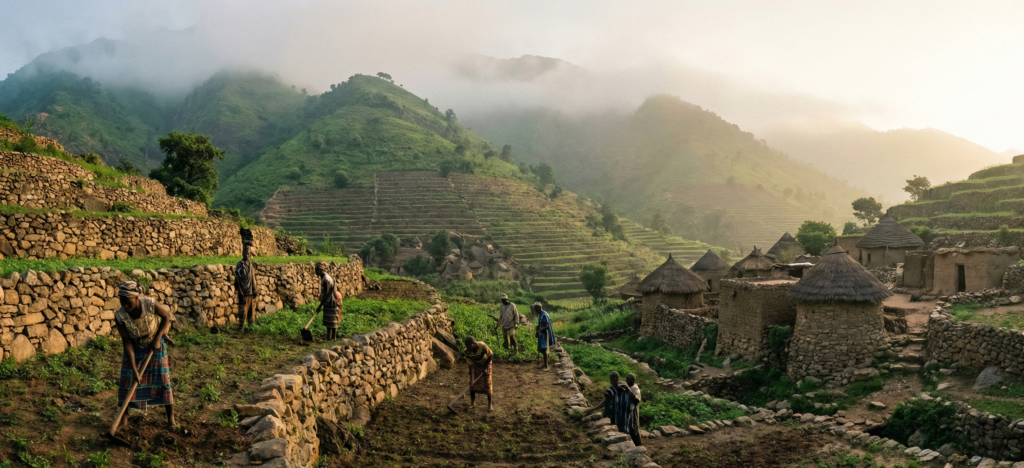
Stone-paved pathways, terraced hillsides, and circular homes form a carefully planned settlement that reflects advanced indigenous knowledge of engineering and land management.
Traditional Architecture and Engineering
One of Sukur’s most striking features is its traditional stone architecture. Homes, granaries, and community structures were built using locally sourced stone and mud, without modern tools—yet they remain durable to this day.
Key architectural highlights include:
- Dry-stone walls and paved walkways
- Stone terraces preventing soil erosion
- Sacred areas and ritual spaces integrated into the landscape
These features demonstrate a sophisticated understanding of structural design, climate adaptation, and sustainability.
A Unique Agricultural System
Agriculture lies at the heart of Sukur’s survival. The community developed a terraced farming system, carved directly into the mountainsides. This method:
- Conserves water
- Prevents land degradation
- Maximizes food production in difficult terrain
The terraces stand as early examples of sustainable agriculture, proving that environmental stewardship was central to ancient African societies.
Cultural and Spiritual Significance
Beyond its physical structures, Sukur is deeply rooted in cultural traditions and spiritual practices. The landscape includes:
- Sacred groves
- Ritual sites
- The remains of a former chief’s palace
Traditional leadership, social hierarchy, and customs are still remembered and practiced, making Sukur a rare example of intangible cultural heritage preserved alongside physical remains.
Why Sukur Matters Today
Sukur Cultural Landscape is a powerful reminder that Africa’s history is rich, complex, and innovative. It challenges outdated narratives by highlighting Africa’s contributions to:
- Architecture
- Environmental management
- Community-based governance
For researchers, travelers, and cultural enthusiasts, Sukur offers an authentic connection to Africa’s ancient past.
Visiting Sukur Cultural Landscape
While still largely undiscovered by mass tourism, Sukur is ideal for:
- Cultural and heritage tourism
- Educational travel
- Eco-tourism experiences
Visitors are encouraged to respect local traditions and preserve the integrity of this unique site.
Source: